Why September Light Changes How Poolside Colors Read
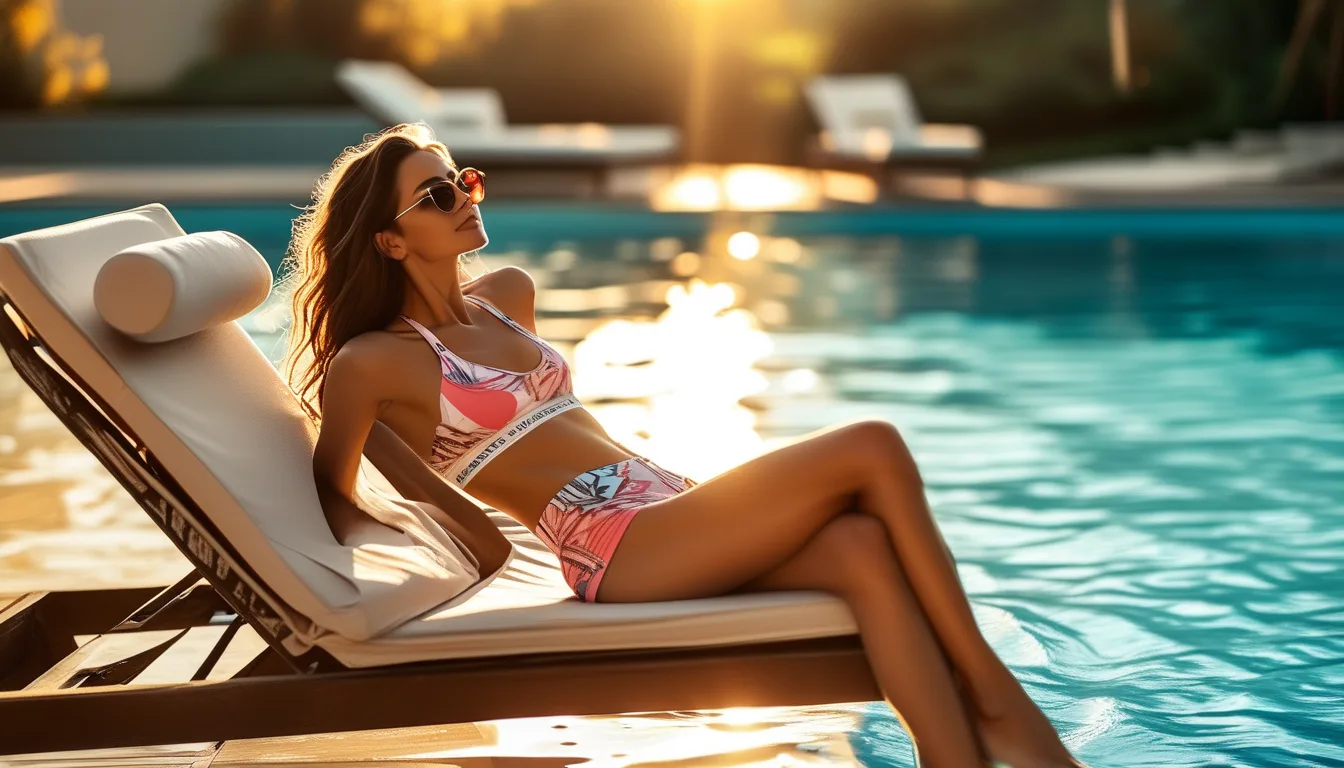
Quick Answer: As the sun sits lower in the sky, its light travels through more atmosphere, which filters out more blue and shifts daylight noticeably warmer and softer. Colours are only what they reflect from the light hitting them - so cool colours lose vibrancy, warm colours gain it, and anything relying on high contrast starts to look muted. Your July poolside palette is not wrong; it is being lit by a different light source.
Here is what changes, and which colours actually gain from it.
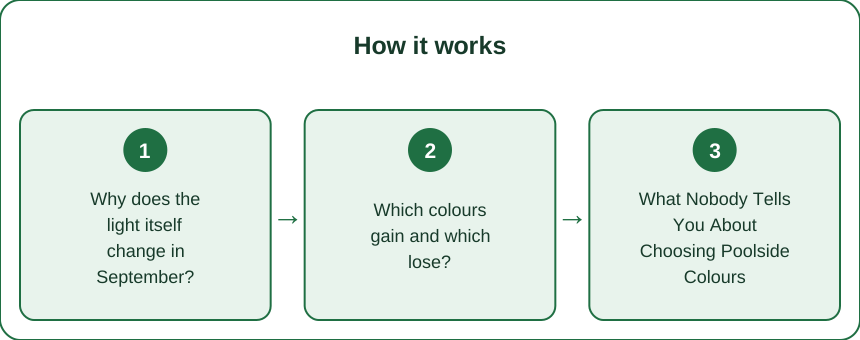
Why does the light itself change in September?
Geometry, not weather.
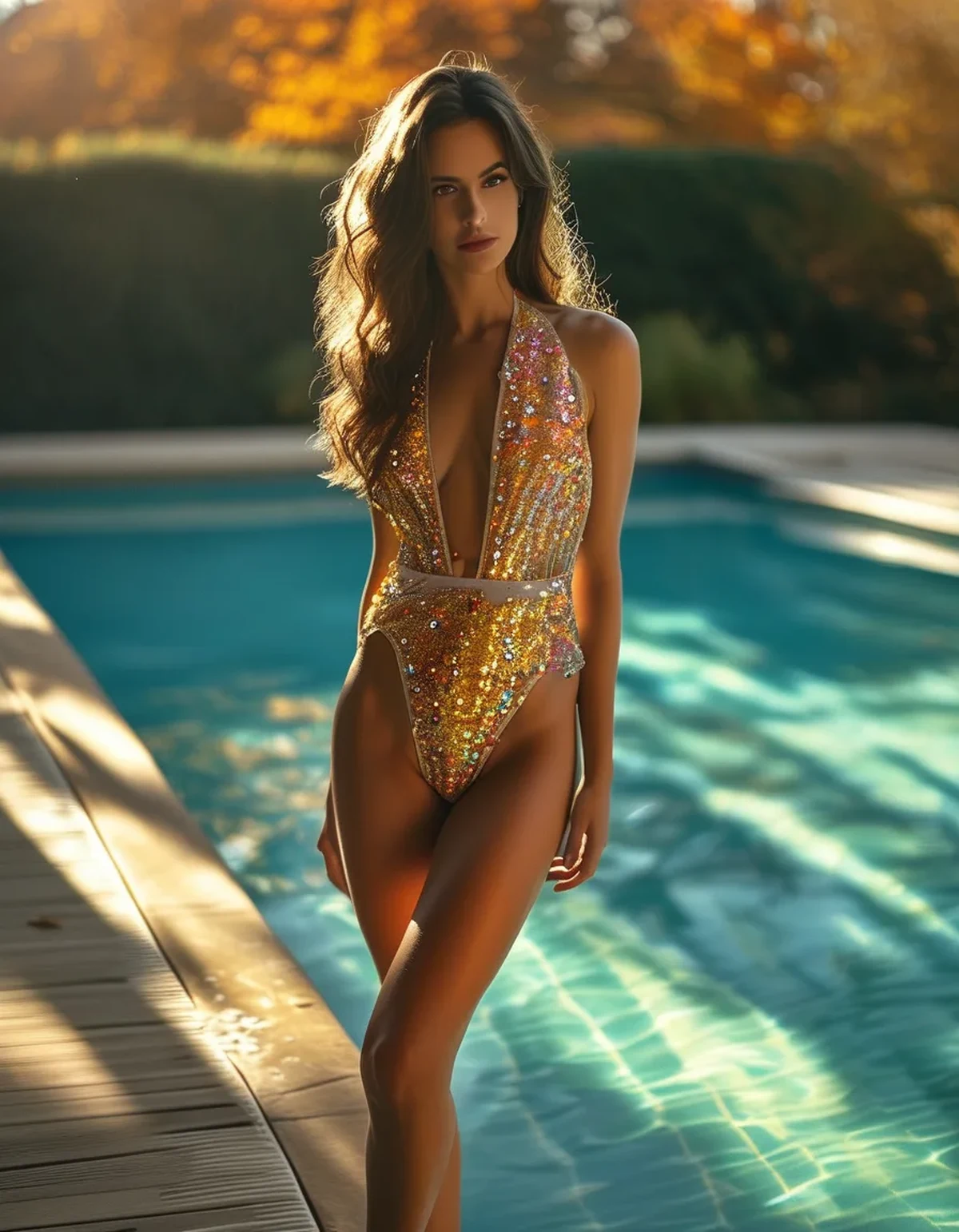
The sun sits lower in the sky as the season turns. Lower angle means sunlight passes through a longer path of atmosphere before it reaches you.
Atmosphere scatters short wavelengths more than long ones. That is why the sky is blue and why sunsets are red - blue light gets scattered out of the direct beam, leaving proportionally more red and orange.
So direct sunlight in September is warmer in colour temperature than the near-overhead light of midsummer, and the effect strengthens through the afternoon because the sun is dropping earlier.
Shadows also change character. Lower sun means longer, softer-edged shadows, and shadows are lit by blue sky rather than by direct sun - so the contrast between warm sunlit areas and cool shadowed areas actually increases even as overall light softens.
Intensity drops too. Less direct sun on a given surface means less saturation across the board - colours read slightly duller, and the difference between similar shades compresses.
And it happens gradually enough that you never notice the light, only the result. Which is why people conclude their clothes have faded or their swimsuit was a mistake, when the garment has not changed at all.
Which colours gain and which lose?
Fairly predictable, once you know the mechanism.
Warm colours gain. Rust, terracotta, coral, amber, warm reds, and golden yellows have more of their reflected wavelengths present in warm light, so they read richer and more saturated than they did in July. This is the whole reason autumn palettes look right in autumn.
Cool colours lose. Icy blues, cool mints, lavender, and cool pastels depend on blue wavelengths that are being filtered out. They go grey and slightly muddy - not wrong exactly, just flat.
Bright white loses its punch. White reflects everything, so it picks up the warm cast directly and reads cream rather than crisp. Crisp white is a high-summer effect.
Black stays black but the outfit around it changes. Black is the one reliable constant, and it makes an excellent anchor in transitional light because everything else is shifting.
Neon behaves unpredictably. Fluorescent dyes work by absorbing UV and re-emitting visible light. Lower UV in September means less of that glow effect, which is why neon activewear looks noticeably less electric as the season turns.
And metallics change most dramatically. Gold gains substantially in warm low light; silver goes flat. If you are choosing accessories for September poolside, this is the single most visible swap available.
What Nobody Tells You About Choosing Poolside Colours
Shop lighting is lying to you, and in a consistent direction. Most retail lighting is warm and bright, which flatters warm tones and dulls cool ones - the same distortion September daylight applies. So a colour that looked good in the shop may have been getting help.
Fitting room mirrors compound it. Overhead lighting casts shadows downward, and the colour temperature is usually nothing like outdoor light. Taking the garment to a window is the single most useful thing you can do in a fitting room.
Water reflects light back upward onto you, and pool water is usually tinted blue by the pool lining. That upward blue bounce partly counteracts the warm daylight near the water and disappears the moment you step away - which is why an outfit can look different beside the pool and on the terrace.
Your phone camera actively fights this. Auto white balance tries to neutralise the warm cast, so photos show a colour neither you nor the fabric produced. If you are choosing based on photos, you are choosing based on your phone’s interpretation.
Skin tone shifts too, and in the same direction. Warm light warms your complexion, which changes which colours sit well against you - typically favouring warm and earthy over cool and icy as the season turns.
And sunscreen genuinely affects colour, both as a white cast on skin and as staining on fabric. Mineral sunscreens with zinc leave the strongest white cast, which is worth knowing before you blame the light for everything.
The one that surprises people: the same outfit photographed at noon and at five in the afternoon in September can look like two different colours. Golden hour arrives much earlier, and it lasts longer, so more of a poolside afternoon falls inside it.
How should a poolside palette shift for early autumn?
Small changes, disproportionate effect.
Move the base warmer. Swap cool white for cream or ivory, icy blue for teal, cool pink for coral. Same brightness, warmer temperature, and everything reads intentional rather than out of season.
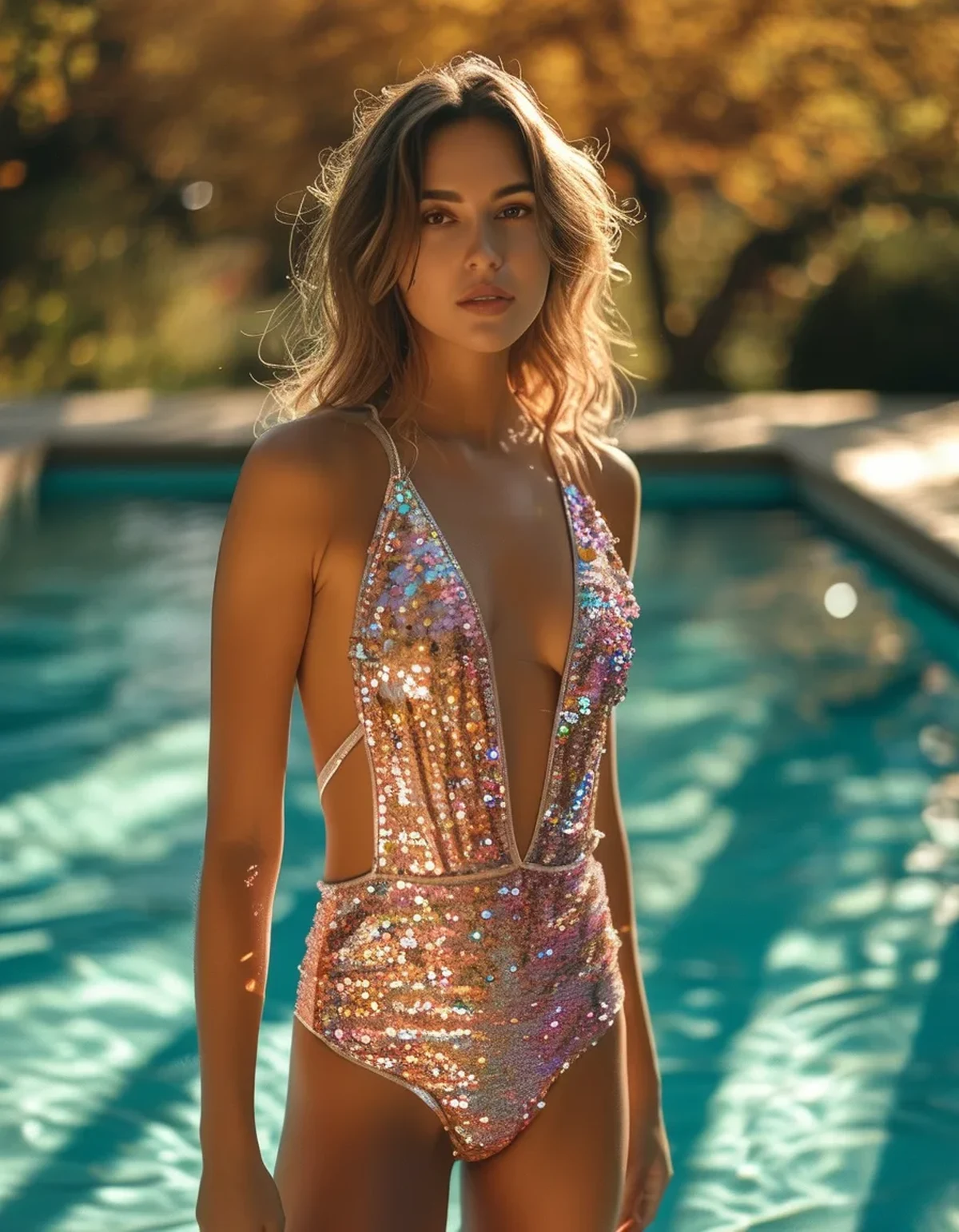
Lean into the colours that gain. Rust, olive, mustard, terracotta, deep coral. These are exactly the colours that looked slightly heavy in July and now look correct - which is the entire logic of a transitional palette.
Keep one high-contrast element. As overall saturation drops, an outfit built entirely from mid-tones goes flat. A black, deep navy, or crisp dark element gives the eye something to anchor on.
Switch metals from silver to gold. The cheapest, most visible seasonal update available. Gold picks up warm light; silver goes grey.
Add texture where you lose colour. Ribbed knit, terry, linen weave, crochet. Texture reads in low-angle light much more strongly than in overhead light, because side lighting creates shadow within the fabric surface. This is genuinely a September advantage.
And plan for the layer. Poolside outfits in September get worn with something over them for a longer share of the day. Choose the swimsuit colour knowing what will be layered over it, rather than choosing it in isolation - the combination is what people will actually see.
One practical test: hold the garment at arm’s length outdoors, in the light you will actually wear it in, at the time of day you will actually wear it. Thirty seconds, and it settles almost every question that fitting-room lighting has confused.
Does any of this affect how fabric performs, not just how it looks?
Yes, in two ways worth knowing.
Darker colours absorb more radiant heat, which was a liability in July and becomes an advantage in September. A dark cover-up on a cool morning is genuinely warmer than a pale one in the same conditions.
Fading slows as UV drops. Colour fading in swimwear comes from a combination of chlorine, salt, and UV exposure. Lower September UV means less photodegradation, though chlorine damage continues unchanged - so rinsing still matters as much as ever.
Red and bright pink fade fastest regardless of season, because the dye molecules used for those shades are generally less stable. A red swimsuit will show its age before a navy one no matter what you do, which is worth factoring into what you spend on it.
Wet-look changes with light angle too. Low-angle light hits wet fabric at a shallow angle and reflects more strongly, so wet fabric looks shinier and clings more visibly in September light than under overhead summer sun. Worth knowing if sheerness when wet is a concern.
And drying is slower. Cooler air, lower sun, and less direct radiant heat mean a garment that dried in twenty minutes in July takes considerably longer now - which affects what you should choose to wear far more than colour does.
Care essentials, unchanged: rinse in cool fresh water after every swim, never leave swimwear balled up wet, wash cool, and air dry away from direct sun. Heat is the main enemy of elastane in every season.
FAQ: Seasonal Light and Colour, Answered
Why does my swimsuit look different in September?
The sun sits lower, so sunlight travels through more atmosphere and loses proportionally more blue. Daylight becomes warmer and softer, which changes which wavelengths your fabric has available to reflect.
Which colours work best in early autumn light?
Warm and earthy tones - rust, terracotta, coral, olive, mustard, amber. These have more of their reflected wavelengths present in warm light and read richer than they did in midsummer.
Why does my neon activewear look duller now?
Fluorescent dyes work by absorbing UV and re-emitting it as visible light. Less UV reaches you when the sun is low, so the glow effect that makes neon look electric is reduced.
Should I switch from silver to gold jewellery?
It is the single most visible seasonal change you can make. Gold picks up warm low-angle light and gains; silver reads grey and flat in the same conditions.
Why do photos not match what I see?
Your phone’s auto white balance tries to neutralise the warm cast, producing a colour neither you nor the fabric produced. Trust your eyes outdoors over the screen.
Does lower UV mean my swimwear will last longer?
Somewhat - less UV means less photodegradation. But chlorine and salt damage continue unchanged, so rinsing in cool fresh water after every swim matters just as much.
TL;DR:
- A lower sun means light travels through more atmosphere, losing blue and turning daylight warmer and softer.
- Warm colours gain (rust, coral, terracotta, gold); cool colours lose (icy blue, mint, lavender, cool pastels).
- Crisp white reads cream, neon loses its glow because there is less UV to fluoresce, and silver goes flat while gold gains.
- Overall saturation drops, so keep one dark high-contrast element to stop the outfit going flat.
- Texture reads more strongly in low-angle light - ribbed, terry, and crochet gain what colour loses.
- Shop lighting and phone cameras both distort in ways that mislead - check the garment outdoors, at the time of day you will wear it.
- Practical shifts: darker colours are now an advantage for warmth, and drying takes noticeably longer than in July.
Nothing faded. The light source changed.
Keep Reading
This article is for general informational and styling purposes only. Fit, sizing, and product availability may vary.