Why Your Poolside Outfit Looks Better in the Mirror Than in the Photo
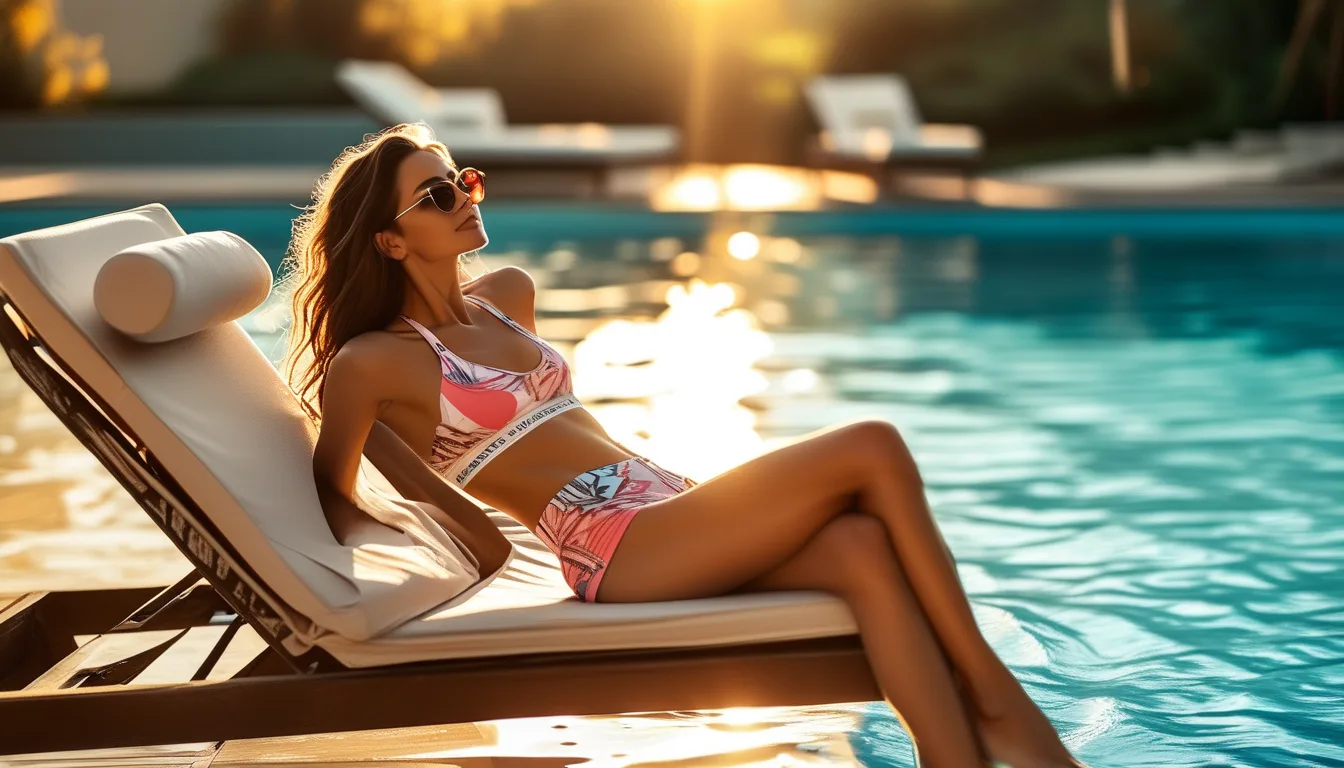
Quick Answer: Pool water acts as a giant reflector that lights you from below, midday sun creates hard shadows under the eyes and chest, and phone wide lenses stretch whatever is closest to them. Shooting between 4 and 6pm with the water behind the camera fixes most of it without changing a single garment.
You checked the mirror on the way out and everything worked.
Then the photos came back and the top looks sheer, the color looks off, and the whole outfit reads flatter than it felt.
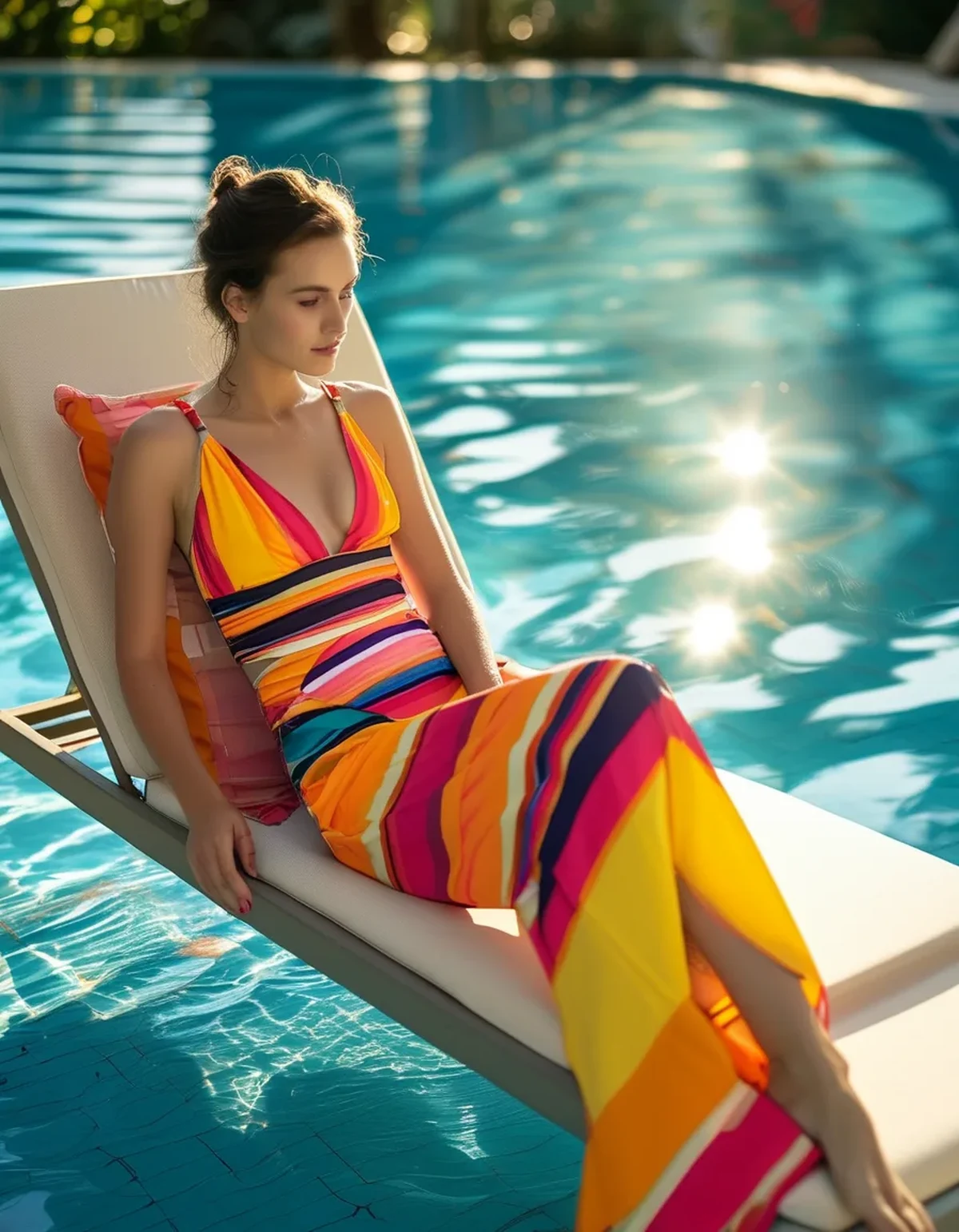
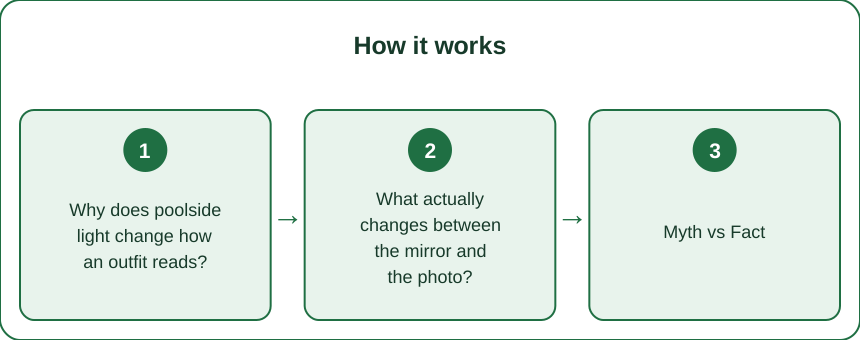
Why does poolside light change how an outfit reads?
Because a pool is a light source, and it is pointed the wrong way.
Water reflects light upward onto you. That bounce fills in shadows from underneath, which reverses the direction we expect light to come from. It flattens facial structure and makes fabric drape read as shapeless because the shadows that describe folds get erased.
Midday sun is nearly straight overhead. Overhead light creates hard shadows under the brow, nose, and bust, and turns bright fabric into blown-out white patches. It is the least flattering light of the day, and it is exactly when people are at the pool.
Wet surfaces raise the overall exposure. Your phone meters for the brightest area, which at a pool is the water, so it darkens everything else. Skin and mid-tone fabrics come out underexposed while whites clip.
Chlorinated water has a color cast. Blue bounce shifts the white balance, so warm-toned fabrics read cooler and neutral whites can go faintly blue-green in the final image.
Sheerness is a lighting condition, not a fabric property. A fabric goes see-through when light comes from behind it. Standing with the pool at your back is functionally standing in front of a giant reflector — same fabric, completely different result.
What actually changes between the mirror and the photo?
Four things, and only one of them is the outfit.
Lens distortion at close range. Phone main cameras are moderately wide. Anything closer to the lens looks larger, which means a photo taken from 3 feet away distorts proportions in a way a mirror never does. Step back and zoom to 2x instead.
The mirror shows you a mirror image. You are used to your reversed face and to an outfit’s asymmetry reversed. A photo shows the unflipped version, and the unfamiliarity reads as something being wrong with the outfit.
Motion is missing. A cover-up that works because it moves is being judged on a single frozen frame. Fabrics chosen for drape lose most of their appeal when static.
Compression and saturation processing. Phone image pipelines boost saturation, which pushes bright poolside colors past where they sat in person — coral goes orange, and pale pink can go peach.
The angle is almost always lower than eye level. Photos taken by someone seated on a lounger shoot upward, which lengthens the legs and shortens the torso. Flattering for some outfits, unhelpful for anything with a defined waist.
Myth vs Fact: Poolside Outfits and Photos
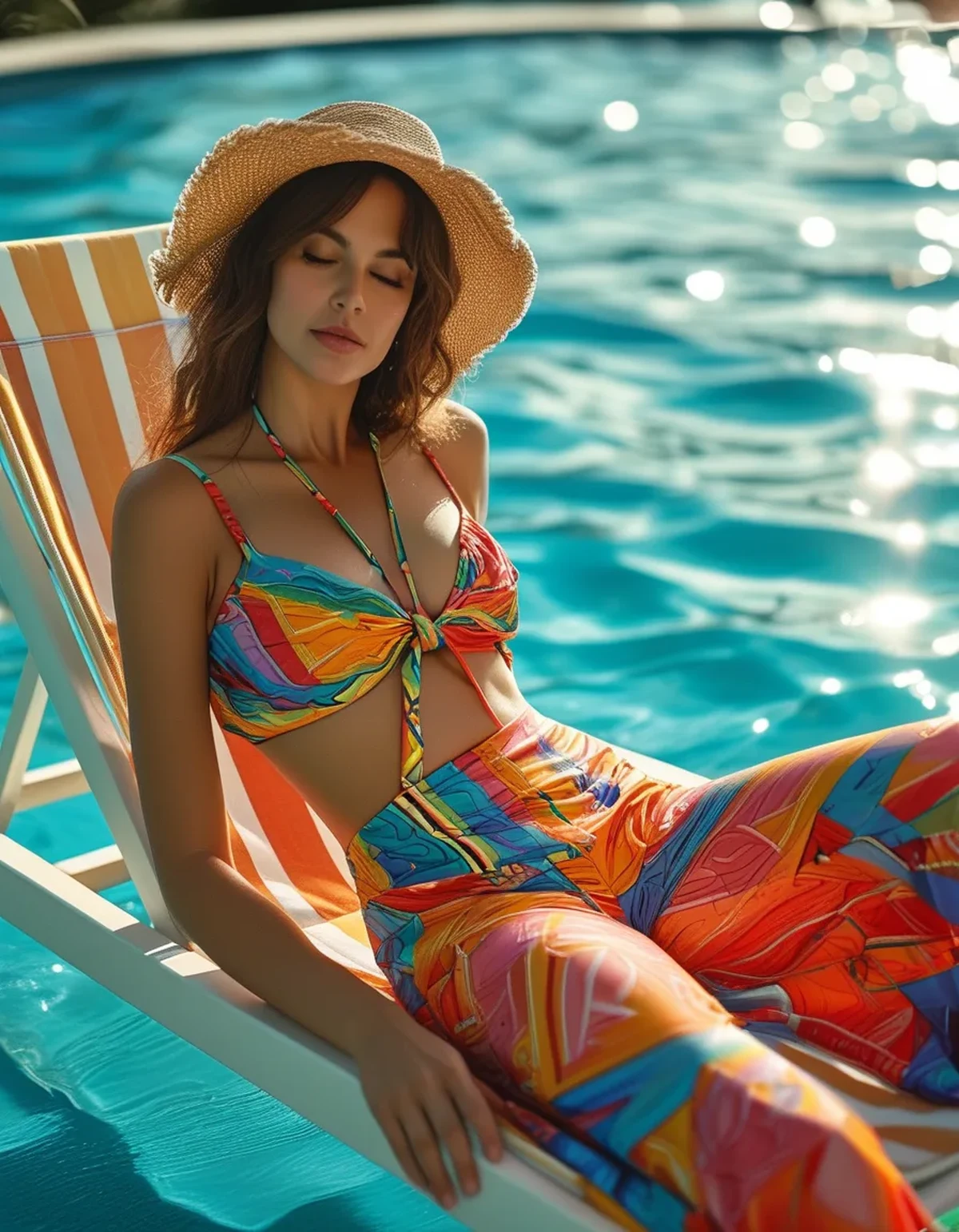
Myth: White is always the safe poolside color. Fact: White clips first in bright sun, losing all texture, and goes most transparent with the water behind you. Mid-tone colors — sage, terracotta, dusty blue — hold detail in the same light.
Myth: A more expensive fabric photographs better. Fact: Weight and weave decide photographic behavior, not price. A 140 gsm linen blend holds its shape in a photo; a featherweight silk of any price goes flat and translucent.
Myth: Filters fix the color cast. Fact: Filters shift everything, including your skin. Setting white balance at the time of the shot, or tapping to expose for your face rather than the water, does far more.
Myth: You need a better camera. Fact: The same phone at 5pm with the water behind the photographer produces a dramatically better photo than a professional camera at noon with the water behind you. Time and direction beat equipment.
Myth: If it photographs badly, it looks bad. Fact: The most common failure at a pool is a fabric chosen specifically for movement being judged on a still image. That is a mismatch between the garment and the medium, not a bad outfit.
How do you dress and shoot for the actual conditions?
Adjust the timing first, then the fabric.
Shoot between 4 and 6pm. Lower sun angle, warmer color, softer shadows. This single change fixes more than every styling adjustment combined, and late-season sun sits lower earlier in the evening than it did in July.
Put the water behind the camera, not behind you. Backlighting from a reflective surface is what makes fabric go sheer. Turning 180 degrees is free.
Choose fabrics around 120 to 160 gsm for photos. Enough weight to keep folds and shadows, light enough to still drape. Below 100 gsm, everything reads translucent in strong light.
Add one structured element. A belt, a defined shoulder, or a stiffer straw bag gives the image an edge to read against. Fully fluid outfits lose their shape entirely in flat light.
Take the photo from eye level, three steps back, at 2x zoom. It removes wide-lens distortion and gives proportions that match what the mirror showed you.
FAQ: Poolside Outfit Photos, Answered
Why does my cover-up look see-through in photos but not in the mirror?
Because in the mirror the light is in front of you and in the photo the pool is usually behind you. Backlighting is what makes fabric transparent. Turn so the water is behind the photographer and most of the transparency disappears.
What colors photograph best at a pool?
Mid-tone saturated colors — terracotta, olive, dusty rose, deep teal. They hold detail when the exposure drops for the bright water, while white and pale pastels clip to featureless patches. Black is the opposite problem: it loses all texture in shadow.
Should I avoid patterned cover-ups in photos?
Small busy patterns can shimmer oddly under phone compression, especially fine stripes. Larger prints and solid blocks come through cleanly. If you love a fine pattern, shoot it in softer late-afternoon light where the contrast is lower.
TL;DR:
- Pool water lights you from below and backlights fabric into transparency; turn so the water is behind the camera.
- Shoot between 4 and 6pm — the lower sun angle beats any styling change you could make.
- Choose 120 to 160 gsm fabrics so folds and shadows survive bright light.
- Step back and use 2x zoom to remove the wide-lens distortion that a mirror never showed you.
The outfit that looked right in the mirror probably is right. The pool is just a very large, very badly placed light.
Keep Reading
This article is for general informational and styling purposes only. Fit, sizing, and product availability may vary.