Why a Poolside Outfit Needs a Genuinely Different Fabric Test Than a Beach Outfit Does

Quick Answer: Beach outfits mainly need to handle sand, sun, and occasional saltwater, while poolside outfits specifically need to handle chlorine exposure and repeated contact with rough concrete or textured deck surfaces, both of which degrade certain fabrics faster than beach conditions do — checking a fabric’s chlorine resistance specifically, not just general ‘swim-friendly’ labeling, is the more relevant test for a poolside-specific wardrobe.
The two settings feel similar, but the actual fabric stress they put on an outfit is different enough to matter for how long pieces last.

Why does chlorine specifically degrade fabric faster than beach conditions?
Chlorine breaks down spandex and elastane fibers over repeated exposure, causing fading and loss of stretch recovery faster than saltwater or sun exposure alone typically does, which is why a beach-durable fabric doesn’t automatically hold up the same way at a chlorinated pool.
What fabric properties should I actually look for in poolside-specific pieces?
Chlorine-resistant fabric blends (often specified explicitly on swimwear labels) hold color and stretch significantly longer under regular pool exposure than standard swim fabric blends, making this label worth checking specifically for pieces you’ll wear at pools often.
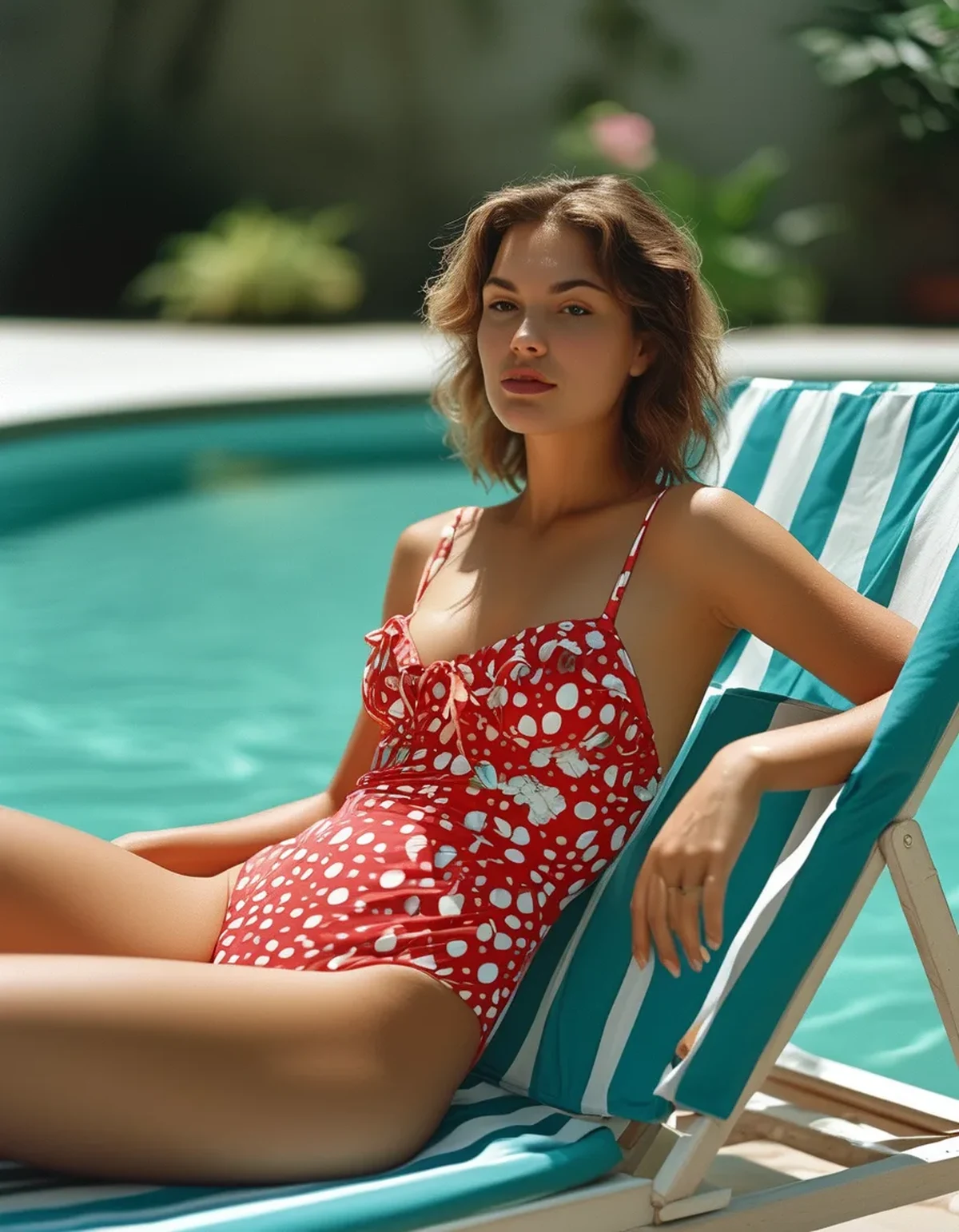
Does the rough texture of pool decks matter for fabric choice too?
Yes — textured concrete deck surfaces cause more abrasion and pilling on fabric than soft sand does, particularly for pieces you sit directly on, so a slightly more durable, tightly-woven fabric holds up better for frequent pool lounging specifically.
Is there a practical way to extend the life of poolside pieces regardless of fabric choice?
Rinsing chlorine off pieces promptly after swimming, rather than letting it dry on the fabric, meaningfully slows chlorine-related fiber breakdown regardless of which fabric you’re wearing, and is one of the simplest habits that extends garment life.
FAQ: Poolside Outfit Fabric Choices, Answered
Is chlorine-resistant fabric worth the usually higher price?
For pieces worn at pools regularly, yes — the extended lifespan and color retention typically outweighs the price difference compared to replacing standard swimwear more frequently.
Does this fabric distinction matter for cover-ups too, or just swimwear itself?
It matters most for pieces with direct, repeated chlorine and water contact; a dry cover-up worn over swimwear faces less direct chlorine exposure and can prioritize other qualities like breathability instead.
Can beach-durable fabric still be used poolside occasionally without issue?
Occasional poolside use is fine for beach-oriented fabric; the difference mainly compounds with frequent, regular chlorine exposure rather than one-off use.
TL;DR:
- Chlorine and rough deck surfaces stress fabric differently than sand and saltwater do
- Chlorine breaks down spandex and elastane fibers faster than beach conditions typically do
- Chlorine-resistant fabric blends hold color and stretch longer under regular pool exposure
- Rinsing chlorine off promptly after swimming meaningfully extends any fabric’s lifespan
Keep Reading
This article is for general informational and styling purposes only. Fit, sizing, and product availability may vary.