Why Poolside Outfits Are Judged Standing and Worn Sitting
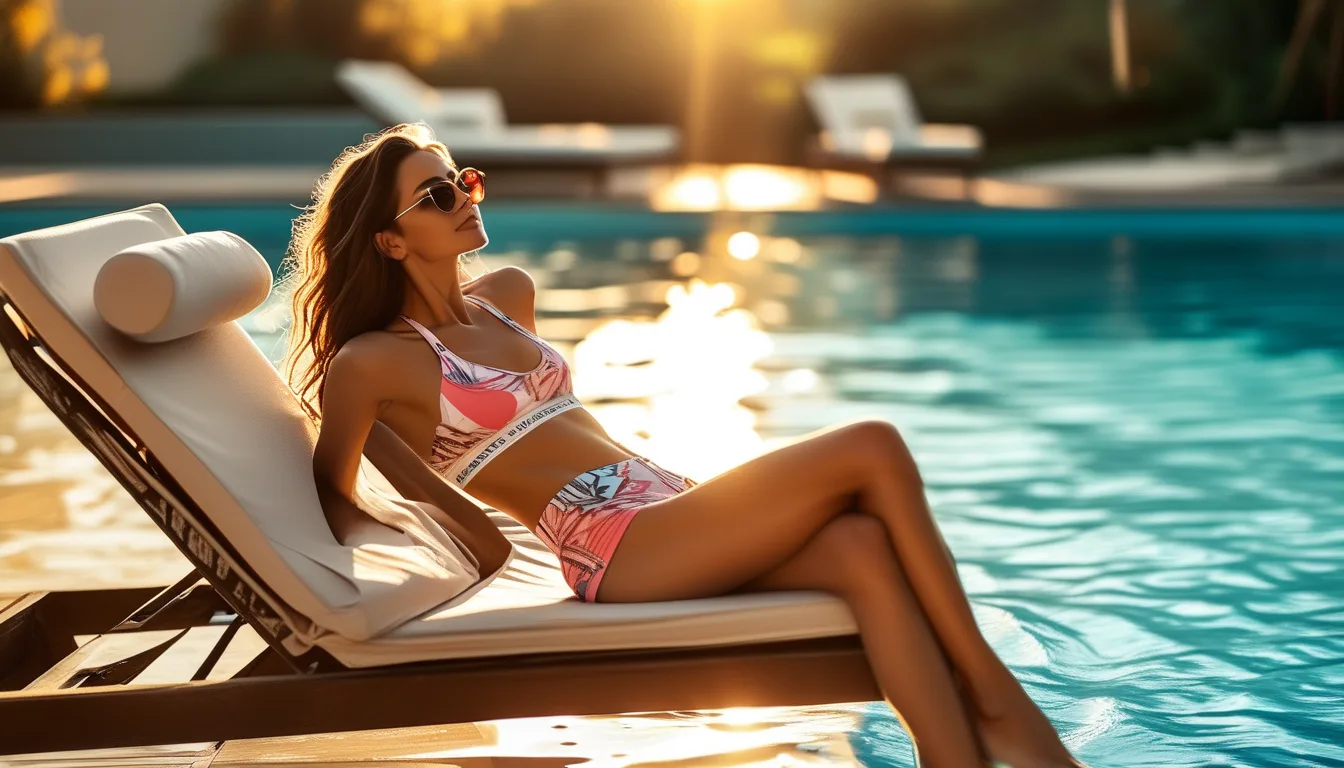
Quick Answer: Almost all outfit assessment happens standing in front of a mirror, but poolside clothing is worn seated for most of its life. Sitting shortens the effective length of anything with a hem, changes where fabric bunches, and shifts every waistband. The fix is a thirty-second seated check before you commit — sit down in the changing room, on a chair, and look at hem position, waistband ride, and where the fabric gathers.
Most poolside outfit regret traces back to a garment that was only ever evaluated upright.

What changes when you sit down in a cover-up?
Four things, all at once, and none of them are visible in a standing mirror.
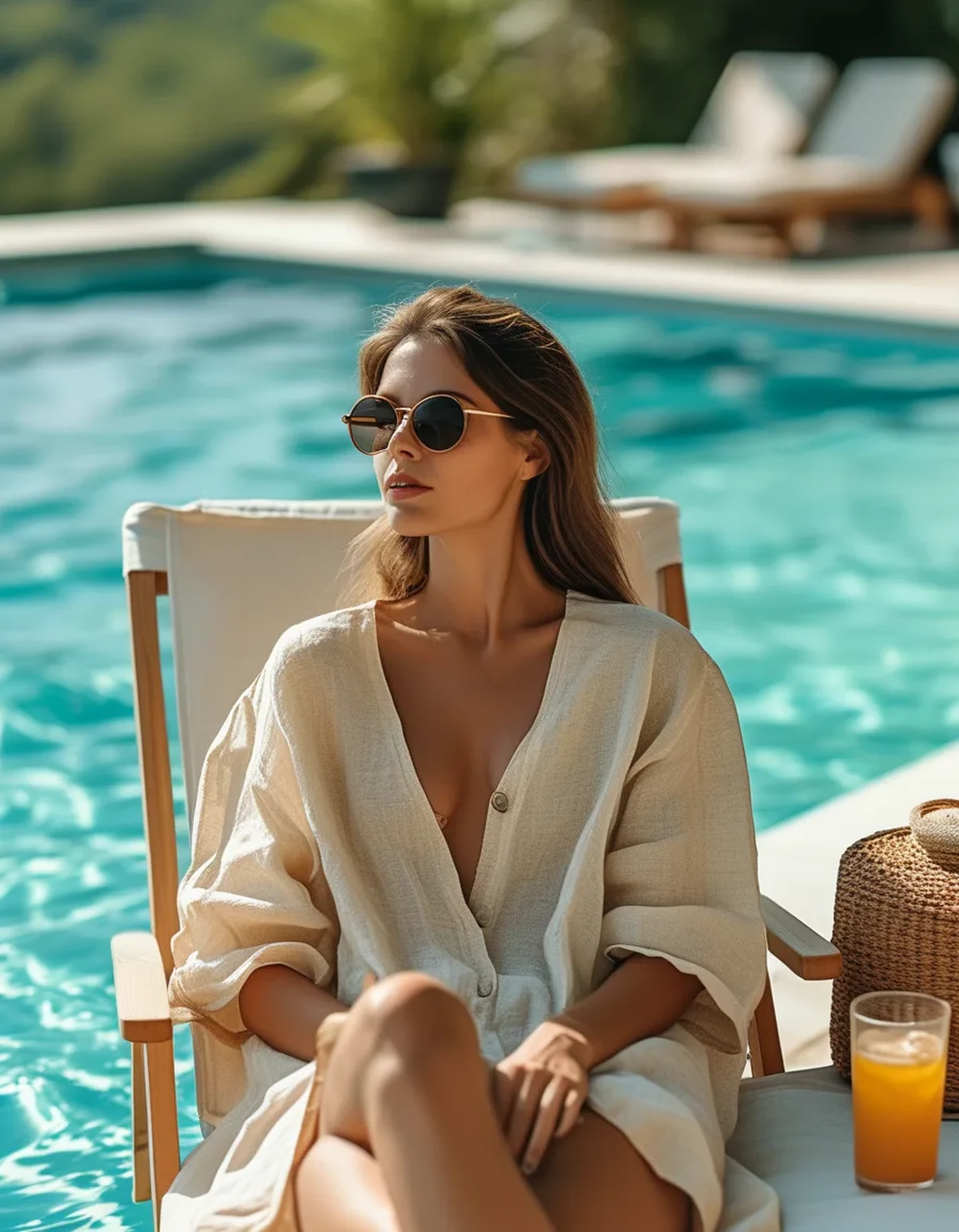
Hem length loses several inches of effective coverage. A cover-up that sits mid-thigh standing typically rides to upper thigh when seated, because the fabric has to travel over the bent hip. On a lounger with the legs extended, it goes further. This is the single most common source of adjusting-all-afternoon discomfort.
The waistband moves up and the back dips down. Any elasticated or drawstring waist rotates as the pelvis tilts back into a chair, which raises the front and lowers the back. Shorts that sit perfectly standing can gap at the back seated, particularly on a low lounger.
Fabric gathers at the front of the hip. Woven fabrics — linen, cotton poplin, rayon — fold into hard creases at the hip crease when seated, and those creases stay. A crisp linen dress that looked immaculate at 11am looks slept-in at 2pm for this reason, not because linen is badly behaved.
Contact points get hot and damp. Anywhere the garment is pressed between you and the chair loses airflow completely. On a plastic or slatted lounger, that means the back of a dress or the seat of shorts is the first area to feel wet, and the last to dry.
All four of these are predictable. None of them is discoverable while standing.
Why does the seated problem get worse specifically at a pool?
Because you sit for longer, in a less supportive chair, in higher heat, and often while damp.
A restaurant chair holds you upright for an hour. A lounger holds you semi-reclined for several hours, which is a far more extreme position for a garment’s geometry. The hip angle is more open, the fabric has further to travel, and the reclining back means anything with a shoulder detail shifts as well.
Heat adds a second layer. Warm skin and warm fabric produce a slight tackiness even before any sweat is involved, and that tackiness is what makes a hem stick to your thigh instead of falling back into place when you stand. This is why the same dress behaves impeccably in a shaded restaurant and badly on a hot terrace.
And then there is the damp variable, which is unique to a pool. A garment that is damp from a swim has a completely different drape and cling than a dry one — heavier, closer to the body, and much slower to release a crease. You are effectively wearing a different fabric weight for the twenty minutes after you get out.
The compounding effect explains why the poolside outfit is the one people most often report as a miss. Almost every other outfit context is more forgiving: shorter sitting time, cooler conditions, dry fabric, better chairs.
Myth vs Fact: Poolside Fit
Myth: A longer cover-up solves seated coverage. Fact: Only partly, and it introduces its own issue. Extra length means extra fabric to bunch and trap heat when seated. A mid-length piece with a side slit or a relaxed cut often provides better real coverage than a long straight one, because the fabric can move rather than fold.
Myth: Stretch fabrics handle sitting better. Fact: Stretch handles movement better but cling worse. A jersey cover-up follows every line when seated and damp, which is the opposite of what most people want poolside. A light woven with volume usually reads better in a chair.
Myth: Wrinkles mean the fabric is poor quality. Fact: Wrinkling is a property of the fiber, not the quality. Linen creases because of the fiber’s structure, and the finest linen creases readily. If creasing bothers you, the answer is a linen blend or a textured weave that hides folds, not a more expensive linen.
Myth: You should size up for comfort in heat. Fact: Oversized garments bunch more when seated, not less. The comfortable option in heat is a garment cut with intentional volume in the right places, which is not the same thing as a larger size of a fitted cut.
Myth: Dark colors are always hotter. Fact: For a loose garment over skin, the difference is smaller than the airflow difference between a fitted light piece and a loose dark one. Cut beats color for perceived heat in most poolside situations.
What does the thirty-second seated check look like?
Four checks, done in a changing room or at home before you leave.
Sit down on an ordinary chair and look at the hem. Where does it land? That is where it will land all day. If you are not comfortable with it seated, you will spend the afternoon pulling at it.
Lean back as if reclining. This is the lounger position, and it is more revealing than upright sitting. Check the neckline and any shoulder detail — off-shoulder and halter styles both shift substantially when you recline.
Cross your legs, then uncross them. This tests whether the fabric returns to position on its own or stays where you left it. Fabrics that stay are the ones you will be constantly resetting.
Stand up and look immediately. Does the garment fall back into place, or does it need a tug? The tug is the tell. A piece that needs a manual reset every time you stand is a piece you will notice all day.
For late August specifically, add one more consideration. The evening transition is real now — poolside afternoons still hit peak heat, but by seven the air is genuinely cooler than it was a month ago. A cover-up that works only in full sun leaves you cold at dinner, so the piece that earns its place is the one you can layer over or add a light knit to.
The pieces that survive this check are usually not the ones that looked best standing. That is the point of the check.
FAQ: Poolside Outfit Questions, Answered
What is the single most reliable poolside cut?
A relaxed mid-length piece in a light woven with some volume through the body — it sits well, moves when you move, and does not cling when damp. Fitted anything is harder to wear for four hours in heat.
How do I stop a cover-up from sticking to a lounger?
A towel between you and the chair, which sounds obvious and is skipped constantly. It also solves the damp-fabric problem, since it absorbs what the garment otherwise holds against you.
Should I bring a second cover-up for a full day?
If you plan to swim more than once, yes. The second one is not about style — it is about having something dry for the part of the day when the air cools. This is more relevant now than it was in July.
TL;DR:
- Poolside clothes are assessed standing and worn seated, and sitting changes hem length, waistband position, and where fabric bunches.
- Loungers make it worse: longer sitting, more open hip angle, higher heat, and damp fabric.
- Volume beats size, and woven beats stretch for seated poolside wear.
- Run a thirty-second seated check — sit, recline, cross your legs, stand — before committing to any piece.
Do the seated check on the cover-up you already own. It will tell you immediately whether the piece you keep adjusting is fixable or simply the wrong cut.
Keep Reading
This article is for general informational and styling purposes only. Fit, sizing, and product availability may vary.