Poolside Outfits That Actually Protect You From the Sun

Quick Answer: A UPF-rated cover-up, a wide-brim hat, and UV-blocking sunglasses cover the sun exposure gaps that sunscreen alone tends to miss — reapplication timing failures are the most common reason sunscreen-only protection falls short poolside.
You reapply sunscreen conscientiously and still end the day with a shoulder burn line from where your cover-up rode up around hour three. Fabric-based protection fills exactly that gap.
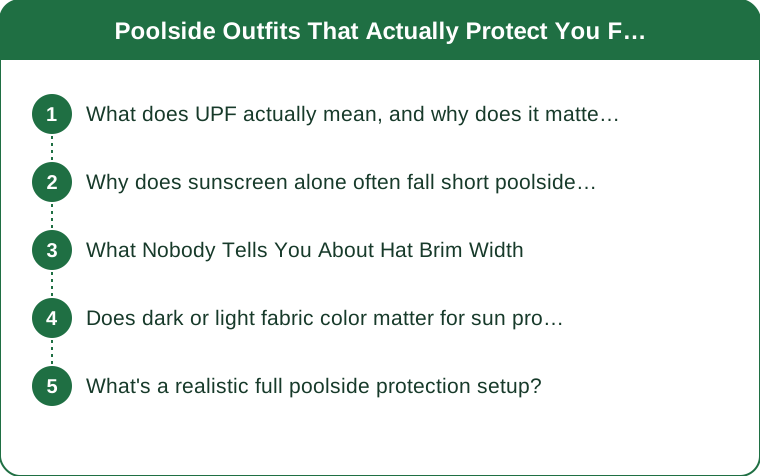
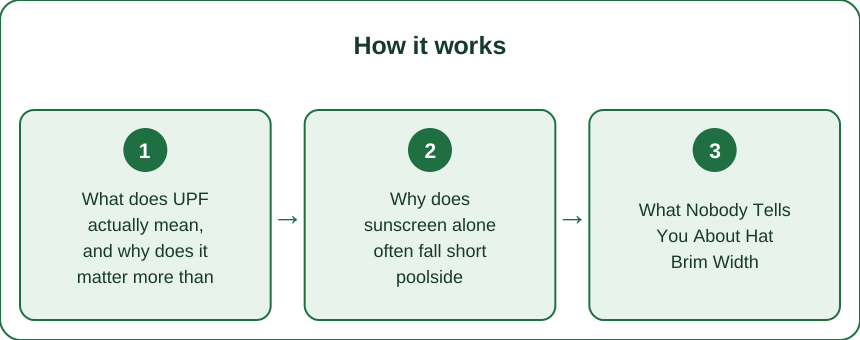
What does UPF actually mean, and why does it matter more than a cute cover-up?
UPF (Ultraviolet Protection Factor) measures how much UV radiation a fabric blocks — a UPF 50 garment blocks about 98% of UV rays, roughly comparable to a well-applied SPF 50 sunscreen, but without the reapplication requirement. Regular clothing fabric, especially lightweight or light-colored weaves, often has a much lower and less consistent UPF rating than people assume.
A thin white cotton cover-up can have a UPF as low as 5-9, which is why ‘wearing a cover-up’ isn’t automatically equivalent to real sun protection unless it’s specifically UPF-rated.
Why does sunscreen alone often fall short poolside specifically?
Poolside exposure typically means multiple hours in direct sun, and sunscreen needs reapplication roughly every two hours, more often after swimming or heavy sweating — a schedule most people don’t actually maintain consistently through a full pool day. Fabric protection doesn’t wash off or degrade the same way, covering the gaps between reapplications.
The combination — sunscreen on exposed skin, UPF fabric on covered areas — closes more of the actual exposure window than either approach alone.

What Nobody Tells You About Hat Brim Width
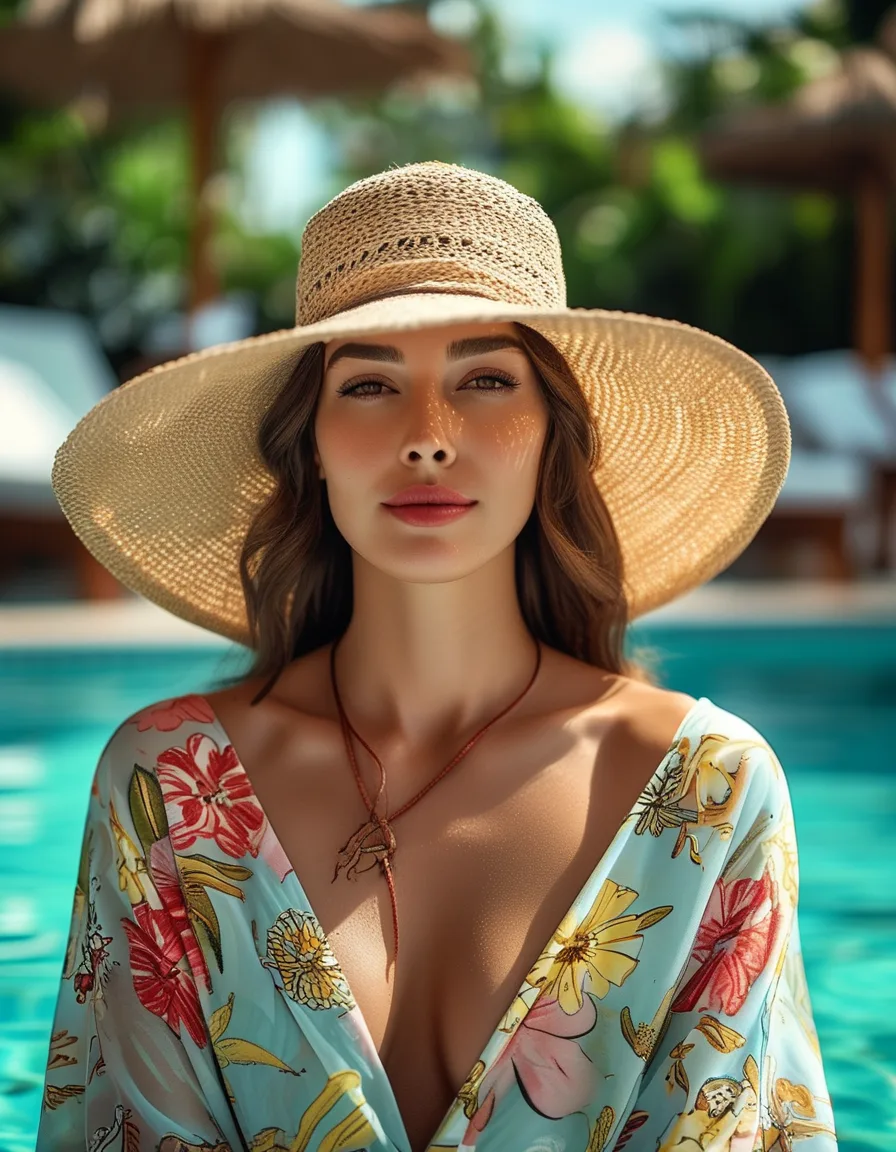
A narrow-brim hat mainly protects the scalp and a small area of the face, missing significant UV exposure to the neck, ears, and lower face that a wider brim (at least 3 inches) actually covers. Ears specifically are among the more common sites for skin cancer, partly because they’re so frequently under-protected by both sunscreen habits and hat choice.
A genuinely wide-brim hat does measurably more protective work than a baseball cap, even though the cap might feel more practical for pool activity.
Does dark or light fabric color matter for sun protection?
Darker colors generally absorb more UV radiation before it reaches skin, giving them a modestly higher UPF than the same fabric in a lighter shade, though the fabric’s weave density and material matter more overall than color alone. A tightly woven dark fabric outperforms a loose, light-colored weave even without a UPF label.
This doesn’t mean avoiding light colors entirely — a specifically UPF-rated light fabric still provides strong protection regardless of color, since the rating accounts for the weave, not just the shade.
What’s a realistic full poolside protection setup?
A UPF 50 cover-up or rash guard for extended sun exposure, a wide-brim hat, UV-blocking sunglasses rated for 100% UVA/UVB protection, and sunscreen on all remaining exposed skin reapplied on schedule. This layered approach protects you even during the hours reapplication realistically gets forgotten.
This is general sun-safety information, not medical advice — anyone with a personal or family history of skin cancer should discuss a more specific sun protection plan with a dermatologist.
TL;DR:
- UPF-rated fabric blocks UV consistently without needing reapplication, unlike sunscreen alone
- Sunscreen’s two-hour reapplication window is where most poolside sun exposure actually happens
- A wide brim (3+ inches) protects the neck and ears far better than a baseball cap
- Fabric weave and UPF rating matter more than color alone for real protection
A stylish poolside look and genuine sun protection aren’t in conflict — UPF fabric now comes in enough variety that you don’t have to choose.
Keep Reading
This article is for general informational and styling purposes only. Fit, sizing, and product availability may vary.