How to Keep Sunscreen From Staining Your Favorite Poolside Outfit

Quick Answer: Sunscreen stains are usually caused by oxidized oils and mineral filters (especially avobenzone and zinc oxide) reacting with fabric dye and fibers, not simply from sunscreen touching clothing — letting sunscreen fully absorb for 10-15 minutes before dressing prevents most stains before they ever start.
The outfit isn’t usually the problem; the timing between applying sunscreen and putting it on is.

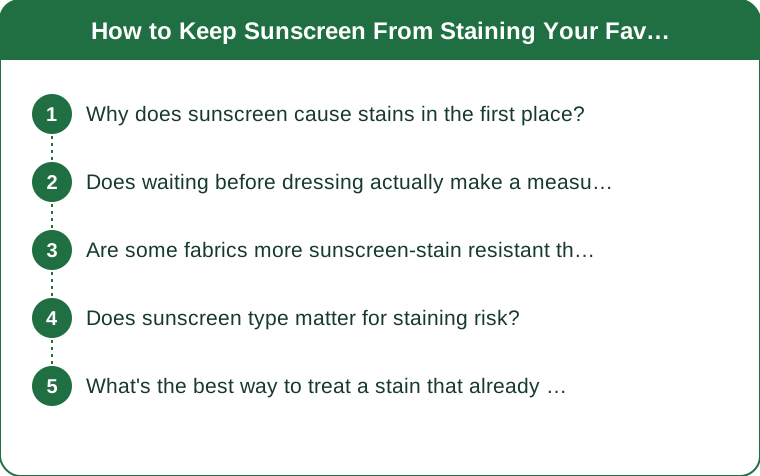
Why does sunscreen cause stains in the first place?
Certain chemical filters, particularly avobenzone, oxidize when exposed to iron in water or minerals over time, creating a rust-colored stain, while physical filters like zinc oxide can leave a separate oily residue that attracts dirt and darkens over repeated washes if not addressed early.
Does waiting before dressing actually make a measurable difference?
Yes, significantly — sunscreen that’s had 10-15 minutes to absorb into skin transfers far less oily residue onto fabric than sunscreen applied and immediately covered, since a large portion of the staining agent is still sitting on the skin’s surface rather than absorbed during that window.

Are some fabrics more sunscreen-stain resistant than others?
Yes — tightly woven synthetic fabrics like nylon and polyester blends common in swimwear tend to resist staining better than natural fibers like cotton or linen, which absorb oils more readily into the fiber itself rather than letting them sit on the surface where they’re easier to wash out.
Does sunscreen type matter for staining risk?
Considerably — mineral sunscreens with zinc oxide are more prone to visible white or oily residue on darker fabrics, while chemical sunscreens are more associated with the rust-colored oxidation stains, so the type of stain risk differs depending on which sunscreen is being used.
What’s the best way to treat a stain that already happened?
Treating the stain with dish soap (which is designed to cut oil) before washing, rather than sending it straight through a regular wash cycle, addresses the oily component directly and tends to have a much higher success rate than standard laundry detergent alone.
TL;DR:
- Oxidizing chemical filters and oily mineral residue are the two main stain causes
- Waiting 10-15 minutes after application before dressing prevents most transfer
- Tightly woven synthetic fabrics resist staining better than natural fibers
- Pre-treating with dish soap addresses oil-based stains more effectively than regular detergent
A few minutes of waiting does more to protect an outfit than any fabric choice alone.
Keep Reading
This article is for general informational and styling purposes only. Fit, sizing, and product availability may vary.