Why Some Poolside Outfits Cling Awkwardly the Moment They Get Wet

Quick Answer: Clinging happens mainly with lightweight, tightly-woven synthetic fabrics (like thin rayon blends) that have little structure when wet — fabrics with a bit of texture, a looser weave, or built-in structure (like a light lining or textured cotton blend) hold their shape and drape better even when splashed.
It’s rarely about fit — it’s almost always about how a specific fabric behaves once water hits it.

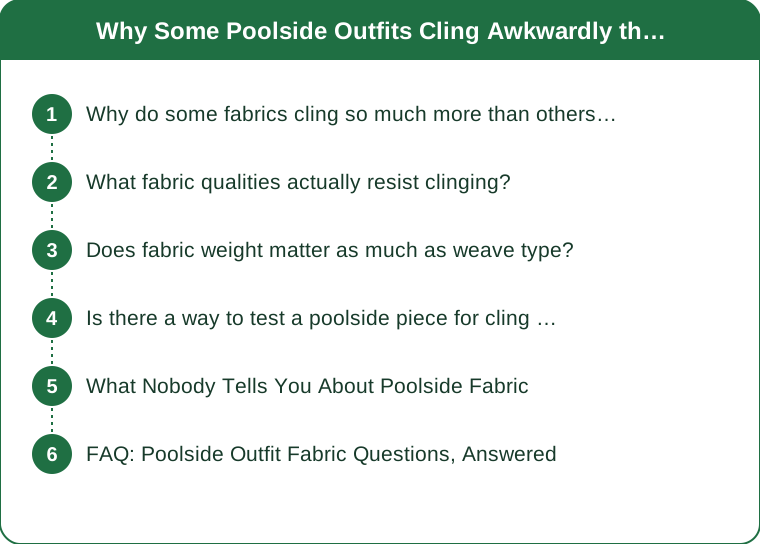
Why do some fabrics cling so much more than others when wet?
Thin, smooth synthetic weaves (like plain rayon or thin polyester) lose almost all structure when wet, since there’s no texture or weight to hold the fabric away from the body — water essentially turns them into a second skin.
What fabric qualities actually resist clinging?
A looser weave, added texture (like crepe or seersucker), or a light structured lining all help a piece hold its shape wet. These qualities create small air pockets or physical structure that water doesn’t fully collapse.
Does fabric weight matter as much as weave type?
Yes, somewhat independently — slightly heavier fabrics generally resist clinging better than very lightweight ones, though an overly heavy wet fabric brings its own discomfort (dragging, slow drying), so there’s a practical middle ground.

Is there a way to test a poolside piece for cling before buying?
A quick in-store check: hold the fabric and lightly mist or dampen a small hidden area (or check the tag for fabric content) — rayon and thin polyester blends are the most likely to cling, while cotton-blend or textured synthetics tend to hold up better.
What Nobody Tells You About Poolside Fabric
Retailers rarely label pieces by wet-performance, only by dry appearance — a piece that photographs beautifully on a hanger can behave completely differently the moment it’s actually near water, which is why checking fabric content on the tag matters more than the product photo.
FAQ: Poolside Outfit Fabric Questions, Answered
Are cotton blends generally safe from clinging?
Mostly yes — cotton absorbs rather than clings the way smooth synthetics do, though it also takes longer to dry, which is worth weighing.
Does color affect how visible clinging looks when wet?
Yes — darker, solid colors show less visible clinging and any resulting sheerness than light or bright solid colors.
Is there a specific fabric blend considered the best all-around choice?
A cotton-poly blend with some texture tends to balance cling resistance, comfort, and reasonable dry time better than either fiber alone.
TL;DR:
- Thin, smooth synthetic weaves lose structure and cling heavily once wet
- Texture, looser weaves, and light structure all help fabric hold its shape near water
- Checking fabric content on the tag predicts wet-behavior better than the product photo
- Darker solids hide clinging and sheerness more than light bright colors
Next time you’re shopping poolside pieces, check the fabric tag before the silhouette — it predicts how the outfit will actually behave once it meets water.
Keep Reading
This article is for general informational and styling purposes only. Fit, sizing, and product availability may vary.