The Poolside Cover-Up Rule That Has Nothing to Do With Hiding Your Body

Quick Answer: A cover-up that moves easily when you walk, sit, and reach for a drink reads as more confident than one chosen purely to hide the most skin, because comfort and ease of motion are what actually project confidence poolside.
If your cover-up strategy is entirely about coverage, you’re solving the wrong problem — the outfits that photograph and feel the best are the ones you can move in without thinking about them.

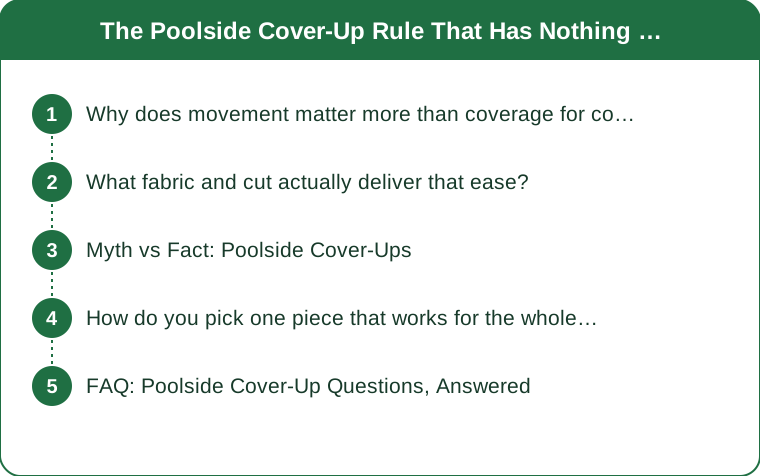
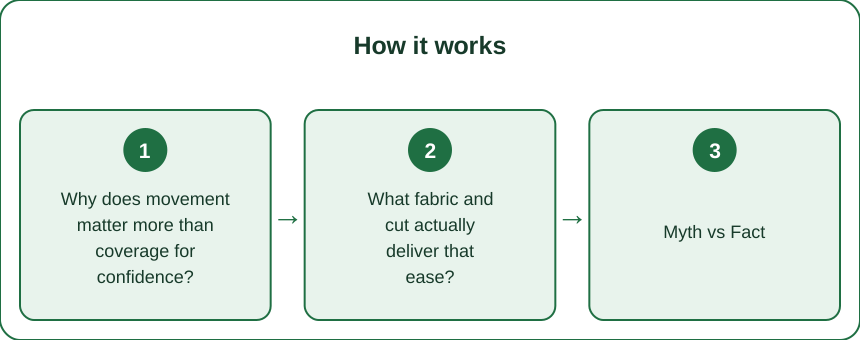
Why does movement matter more than coverage for confidence?
Constantly adjusting, tugging, or holding a cover-up in place signals discomfort far more loudly than the swimsuit underneath ever does, which is why a well-fitted, easy-to-move-in piece reads as more confident on camera and in person.
A cover-up you don’t have to think about frees up your attention for actually enjoying the pool, which is the entire point of the day.
What fabric and cut actually deliver that ease?
A lightweight, slightly structured fabric — like linen-blend or textured cotton — holds its shape without clinging when wet or windy, avoiding the two most common cover-up frustrations.
A cut that opens easily (front-tie, button-down, or simple pull-over) beats anything you have to wrestle on and off over a wet swimsuit multiple times a day.

Myth vs Fact: Poolside Cover-Ups
Myth: a longer cover-up is always the more flattering choice. Fact: length matters less than fit at the shoulders and how it moves when you walk — an ill-fitting long cover-up can look more self-conscious than a well-fitting short one.
Myth: you need a different cover-up for every swimsuit. Fact: one or two versatile, easy-movement pieces in neutral tones pair with almost any suit, which simplifies packing and decision fatigue.
How do you pick one piece that works for the whole day?
A cover-up that transitions from lounge chair to poolside bar to lunch without a full outfit change saves both packing space and mid-day stress.
Adding one small accessory — a hat or simple sandal — does more for a put-together look than changing the cover-up itself, since it adds visual interest without extra effort.
FAQ: Poolside Cover-Up Questions, Answered
What’s the most versatile cover-up color?
A neutral tone like white, sand, or black works with the widest range of swimsuit colors and patterns, reducing how many pieces you need to pack.
Should a cover-up be tight or loose?
Loose but well-fitted at the shoulders is generally more comfortable and flattering than tight, since it moves with you rather than clinging when wet.
Can one cover-up work for both lounging and walking around?
Yes, a simple wrap or button-down style works for both, as long as it’s easy to adjust and doesn’t restrict your stride.
TL;DR:
- Ease of movement reads as more confident than maximum coverage
- Lightweight, slightly structured fabric avoids clinging and constant adjusting
- One or two versatile, neutral pieces beat a different cover-up for every suit
- A small accessory adds polish without extra effort
Pick your poolside cover-up for how it moves, not just how much it covers — that’s the actual confidence shortcut.
Keep Reading
This article is for general informational and styling purposes only. Fit, sizing, and product availability may vary.